
A bride texts you at 6 a.m. to add two more bridesmaids. A client cancels the week of the event and asks for her deposit back. A venue sits two hours away and nobody mentioned parking.
A clear makeup artist contract answers these questions before they come up. It tells clients exactly what they are booking, what it costs, and what happens if plans change, so you can spend the event day doing makeup instead of negotiating.
Use this guide to check what your contract covers, whether you are writing your first one or updating a contract you have used for years.
Why every makeup artist needs a contract
Verbal agreements and DM conversations are easy to forget and hard to point back to. A written contract gives you and your client one place to confirm the details.
A good contract helps you:
- Set expectations for services, timing, and pricing in writing.
- Protect your time when a client cancels or reschedules.
- Collect deposits with a clear explanation of how they work.
- Look professional from the first booking conversation.
Contracts matter most for bridal and event work, where you may be booking a date months in advance and turning other clients away to hold it.
What to include in a makeup artist contract
These 12 sections cover the details most makeup artists need. Adjust the wording to match your services and policies.
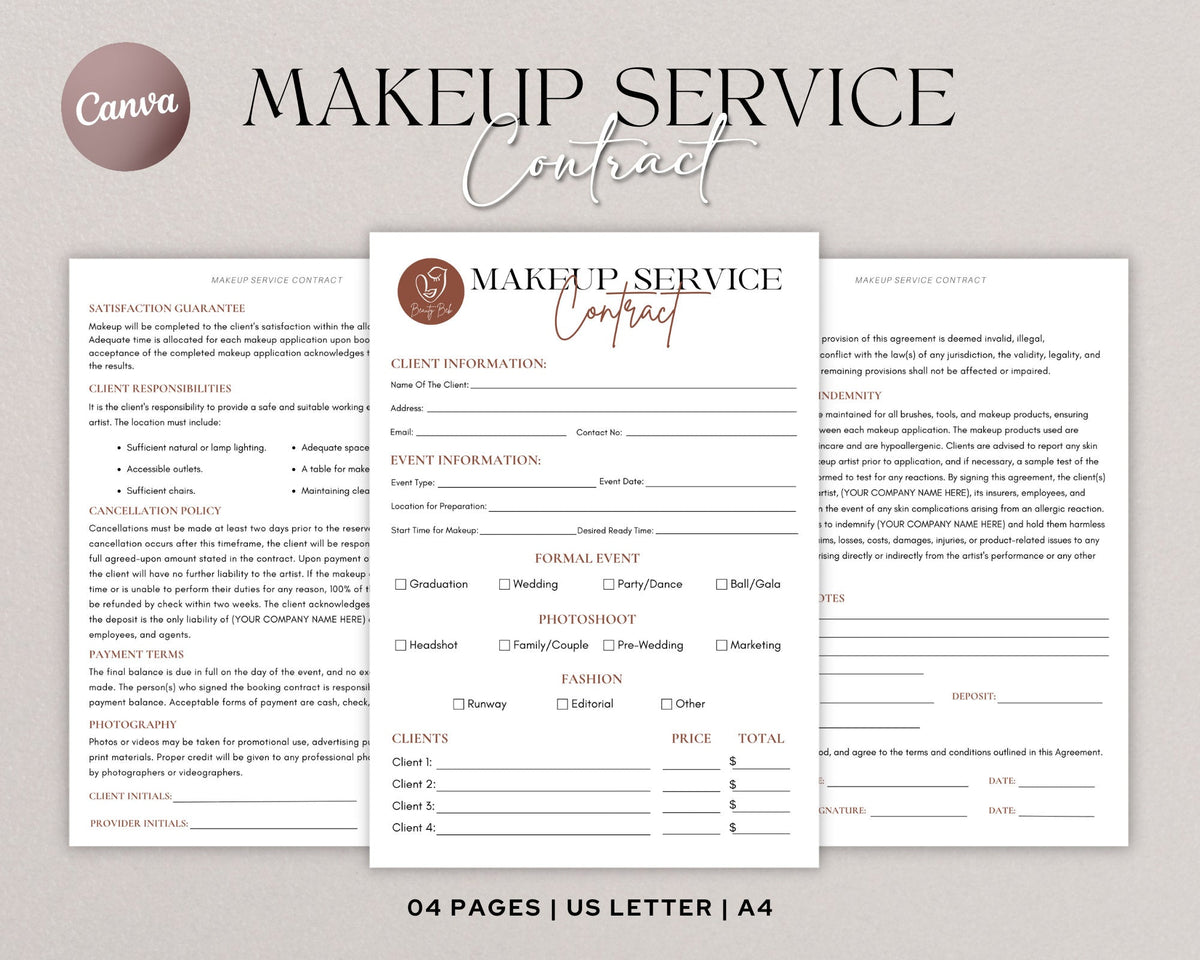
1. Your business and client details
List your business name, contact information, and the client's full name, phone number, and email. For bridal bookings, include the name of the person responsible for payment if it isn't the bride.
2. Event date, location, and timeline
Record the event date, the full address where you will be working, your arrival time, and the time everyone needs to be ready. A "ready-by" time helps you plan how many people you can finish and whether you need an assistant.
3. Services and number of clients
Spell out what is included: bridal makeup, bridesmaids, mothers of the bride and groom, lashes, airbrush, or touch-ups. Write down the number of people you are booked for and how you will handle additions on the day.
4. Pricing for each service
List the price per person and per service, plus any add-ons such as lashes or early start fees. A clear breakdown prevents surprises when the final invoice arrives.
5. Deposit and payment schedule
State how much the client pays to reserve the date, when the remaining balance is due, and which payment methods you accept. Many artists ask for the balance before the event day so they aren't collecting money while working.
6. Cancellation and rescheduling policy
Explain what happens if the client cancels, changes the date, or reduces the number of people. Say whether the deposit is refundable and whether it can be applied to a new date. This is one of the most important sections, so keep the wording simple and specific.
7. Travel fees and parking
If you travel to clients, list your travel fee, how far you travel before it applies, and who covers parking, tolls, or accommodation for distant venues.
8. Early starts, wait time, and overtime
Set a fee for start times before a certain hour and for time spent waiting when clients aren't ready. If you stay on site for extra hours, include an hourly rate.
9. Skin prep and allergy disclosure
Ask clients to tell you about allergies, sensitivities, or skin conditions before the appointment. You can also share how you would like them to prepare, such as arriving with clean, moisturized skin.
10. Trial appointments
If you offer a bridal trial, include the price, how long it takes, and whether it is required. Note whether the trial fee is separate from the event booking.
11. Photo and social media permission
Ask whether you can share photos of your work on your website and social media. Give clients a simple way to opt in or out.
12. Signatures and date
End with a space for you and the client to sign and date the agreement. Keep a copy for your records and send one to the client.
Bridal makeup contracts: extra details to add
Weddings involve more people and tighter timelines. For bridal bookings, consider adding:
- A deadline for confirming the final number of bridal party members.
- Who your main contact is on the wedding day.
- A suitable workspace with good lighting, a table, and power outlets.
- Whether you stay for touch-ups after the ceremony.
Hairstylists working weddings can use the same checklist. The Bridal Hair Service Contract covers the same structure for freelance hairstylists.
Tips for writing a contract clients actually read
- Use plain language. Short sentences are easier to understand and harder to misread.
- Keep it branded. Use your logo, colors, and fonts so the contract matches your other materials.
- Send it early. Share the contract when the client books, not the week before the event.
- Highlight key policies. Repeat your deposit and cancellation terms in your booking confirmation message.
- Review it yearly. Update prices, travel fees, and policies as your business grows.
Start with a makeup artist contract template
Writing a contract from a blank page takes time. A template gives you the structure, so you only need to fill in your own services, prices, and policies.
The Makeup Artist Service Contract template from Brands Go Viral is built for bridal and event bookings. You edit every section in free Canva, then print it or send it as a PDF. It comes in US Letter and A4 sizes.
Looking for intake forms, consent forms, or client records too? Browse the client forms and contracts collection.
Makeup artist contract FAQ
Do I need a contract for every makeup client?
Contracts are most useful for bridal, event, and group bookings. For quick single appointments, a clear booking policy may be enough. Decide what fits your business and apply it consistently.
How much deposit should a makeup artist charge?
Deposit amounts vary by artist, location, and booking size. Choose an amount that covers the cost of holding the date, and state it clearly in your contract.
Can clients sign a makeup contract online?
Yes. You can send your contract as a PDF and use an e-signature tool, or print it and sign in person.
Is a contract template the same as legal advice?
No. A template gives you a professional starting point, but laws differ by location. Have a local professional review your terms if you have questions.
Book with confidence
A clear contract sets the tone for a smooth booking. Start with the 12 sections above, add your own policies, and send it to every client before the big day.


Leave a comment
This site is protected by hCaptcha and the hCaptcha Privacy Policy and Terms of Service apply.